
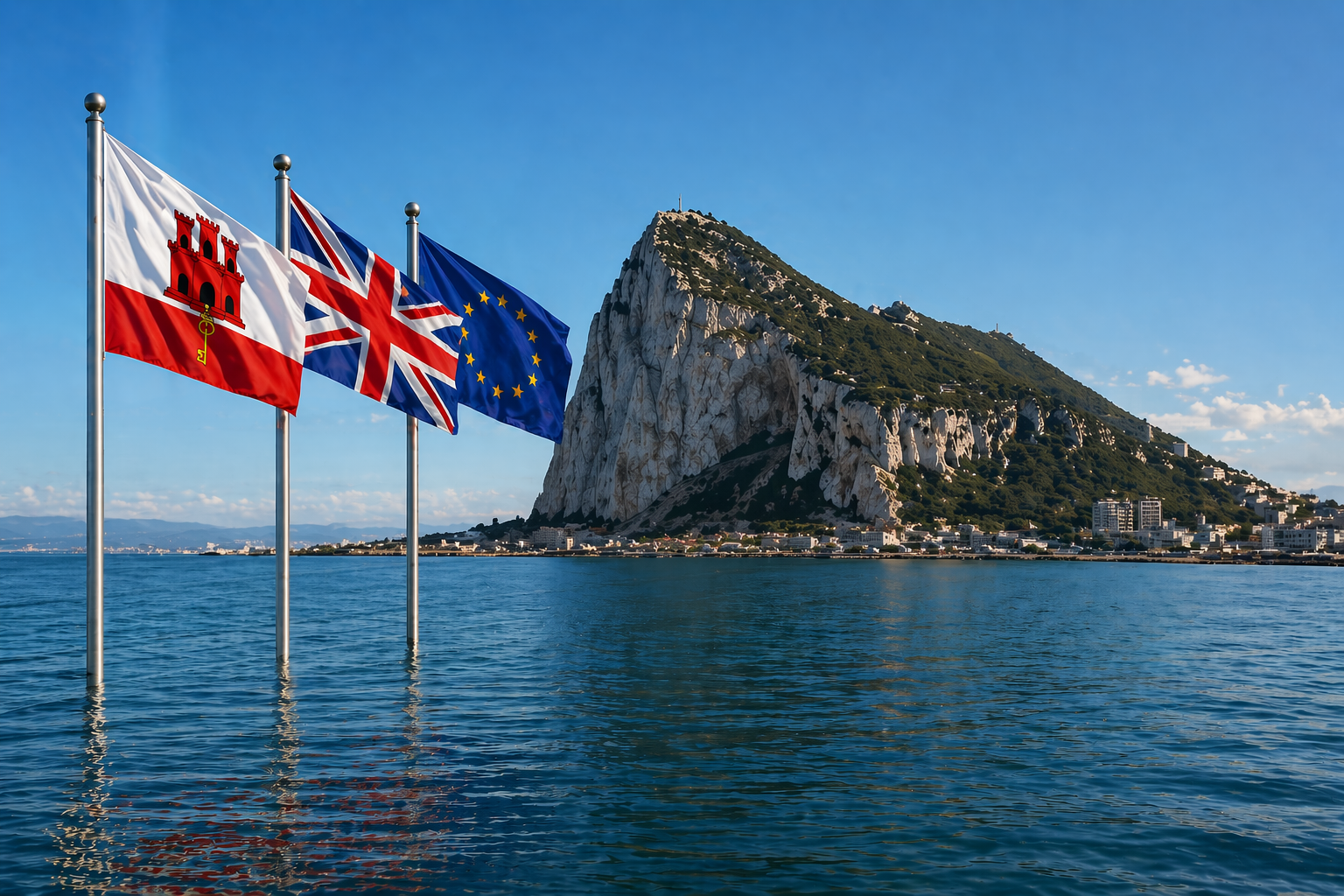
Gibraltar Treaty: April Update and What It Means Now
The proposed UK–EU treaty in respect of Gibraltar remains the defining issue for the Rock’s economy, property market and regulatory landscape.
The key update: the anticipated implementation timeline has shifted from 10 April to a new administrative long stop of 15 July 2026. That change removes the immediate “cliff edge” and gives residents, investors and businesses more time to assess what the treaty will mean in practice, particularly on residency, which remains the critical issue.
Below is a concise guide to the key points, with links to our detailed explainers published in our twice weekly newsletter, the Bitesize Brief, in recent weeks.
Framework, Not Control
The treaty introduces structure, not a transfer of power. Gibraltar retains control of residency and domestic policy. Spain’s role is limited to defined Schengen security checks. The system is procedural, not political.
Residency: The Core Issue
Residency remains the focal point. Gibraltar continues to decide who qualifies. The change is that permits must be notified to Spain before issue, with a short window for objection on strict grounds. Crucially, this operates on a “silence equals approval” basis. Existing residents keep their status. Documentation transitions, it does not expire.
EU Relations Bill: Process in Law
The EU Relations Bill embeds the treaty into Gibraltar legislation. Eligibility remains local. What changes is the process, formal notification, defined objections and oversight of future rule changes.
Schengen: 90/180 in Practice
The 90/180 rule still exists, but its enforcement changes. No passport stamping, no EES, no ETIAS at the frontier. That creates a “de facto non-application” for everyday crossings. But it still matters:
- particularly when flying into Schengen
- and every day spent counts
Imports: A Tax and Structural Shift
A new 15% Transaction Tax replaces much of the current import duty system. For many goods, especially tech, this increases landed cost, for example, a £1,000 item becoming £1,150 on import where the current duty is 0%.
Inflation: One-Off Reset
Higher import costs are likely to feed into prices. The effect is expected to be a one-off upward reset, not sustained inflation, with some offset from cross-border shopping in Spain .
Alcohol: A Clear Example
Alcohol moves to a dual system, excise plus transaction tax.
Impact:
- Beer: limited
- Wine: mixed
- Spirits: most upward pressure
Property: Process Changes, Not Demand
For property, the shift is structural rather than fundamental. Expect:
- conditional transactions
- longer timelines
- more interim rental strategies
The underlying point remains: this is an adjustment in process, not a collapse in demand .
Bottom Line
The move from April to July reduces immediate pressure but does not change the direction of travel. The next key moment is the publication of detailed residency rules.
Once that clarity arrives, activity, particularly in the property market, is likely to follow quickly.
Subscribe to Bitesize Brief here.
 To receive the twice weekly Bitesize Brief on Gibraltar property, economy, business and tax issues sign up here.
Contributed by Mike Nicholls
Recent articles
-
Chestertons and EBike-Gibraltar Support Gibraltar’s Plant Conservation Efforts
Chestertons and EBike-Gibraltar Support Gibraltar’s Plant Conservation …
-
Chestertons wins Outstanding Community Impact Award
Chestertons wins Outstanding Community Impact AwardChestertons Gibraltar has …
-
Record Month for the Chestertons Website
Record Month for the Chestertons Website June 2026 was a record breaking month …